Project Info
Living in Seattle presents challenges in finding affordable space. This live/work loft was initially rented at a slight discount because the owner had trouble filling the space. Situated on a less busy, somewhat inactive street, a business would have a hard time attracting passers-by, while the space itself was poorly arranged for living. As a designer, I saw this space is an opportunity to create something new, and improve the experience of living here in a number of ways, creating something unique and fun along the way.
Project Detail
-
Summer 2012
-
Spacial design, Ergonomics,
-
Personal project
Existing Condition
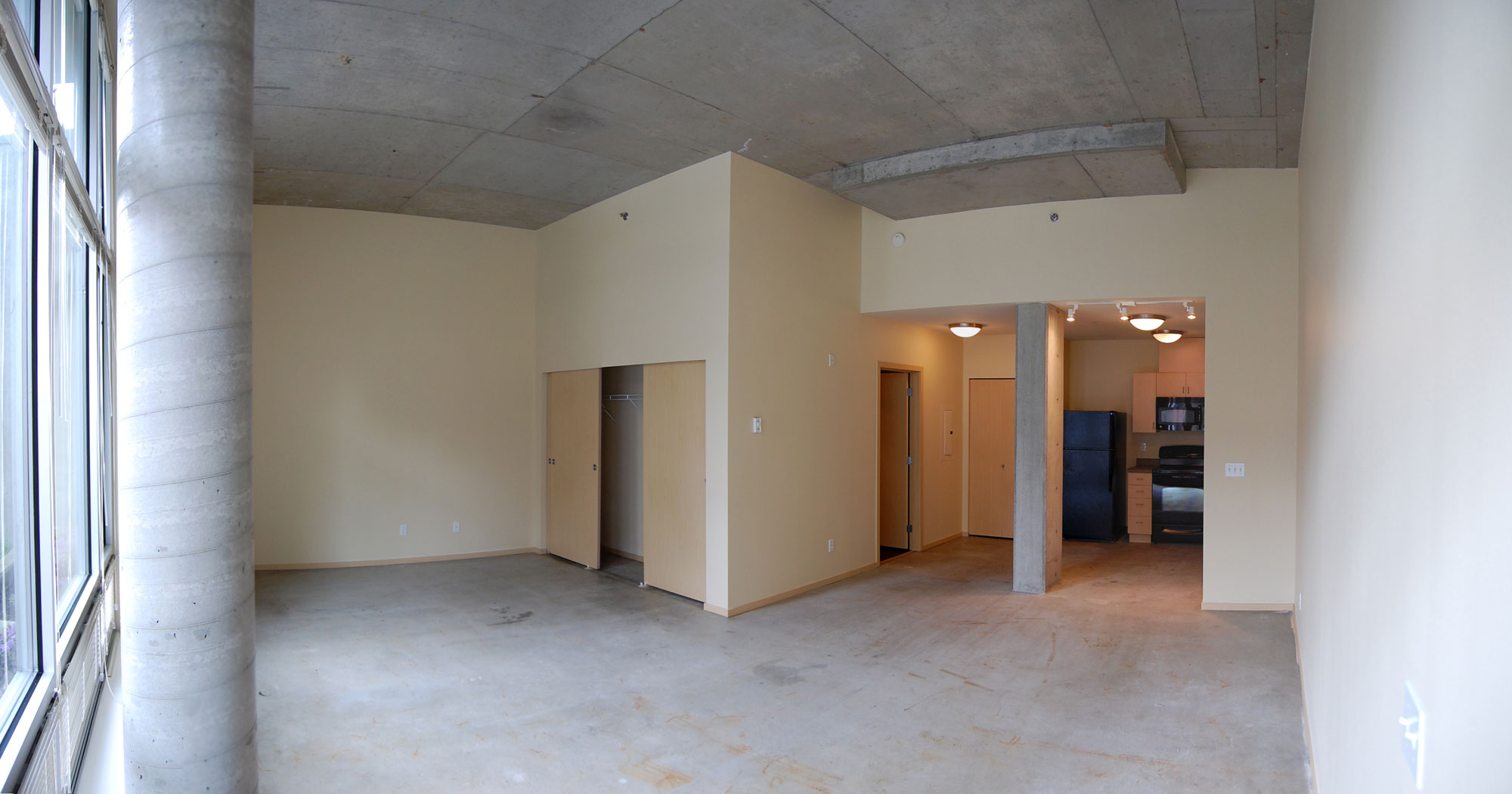
The live-work unit in which the loft was built was situated on the ground floor, with its own entry. These types of spaces are able to be used for both small commercial and residential use, and are designed as an incubator for small businesses. During the time I lived here, several business came and went in neighboring units, though when they converted to residential use they tended to stay that way. Eventually, as the economy picked up in Seattle, I was priced out of this area. This unit had 12' ceilings, an awkward floor plan, and a corner-layout kitchen that added up to a very odd space. The walls were painted a sickly yellow, which was one of the first things I'd change.
Design Development
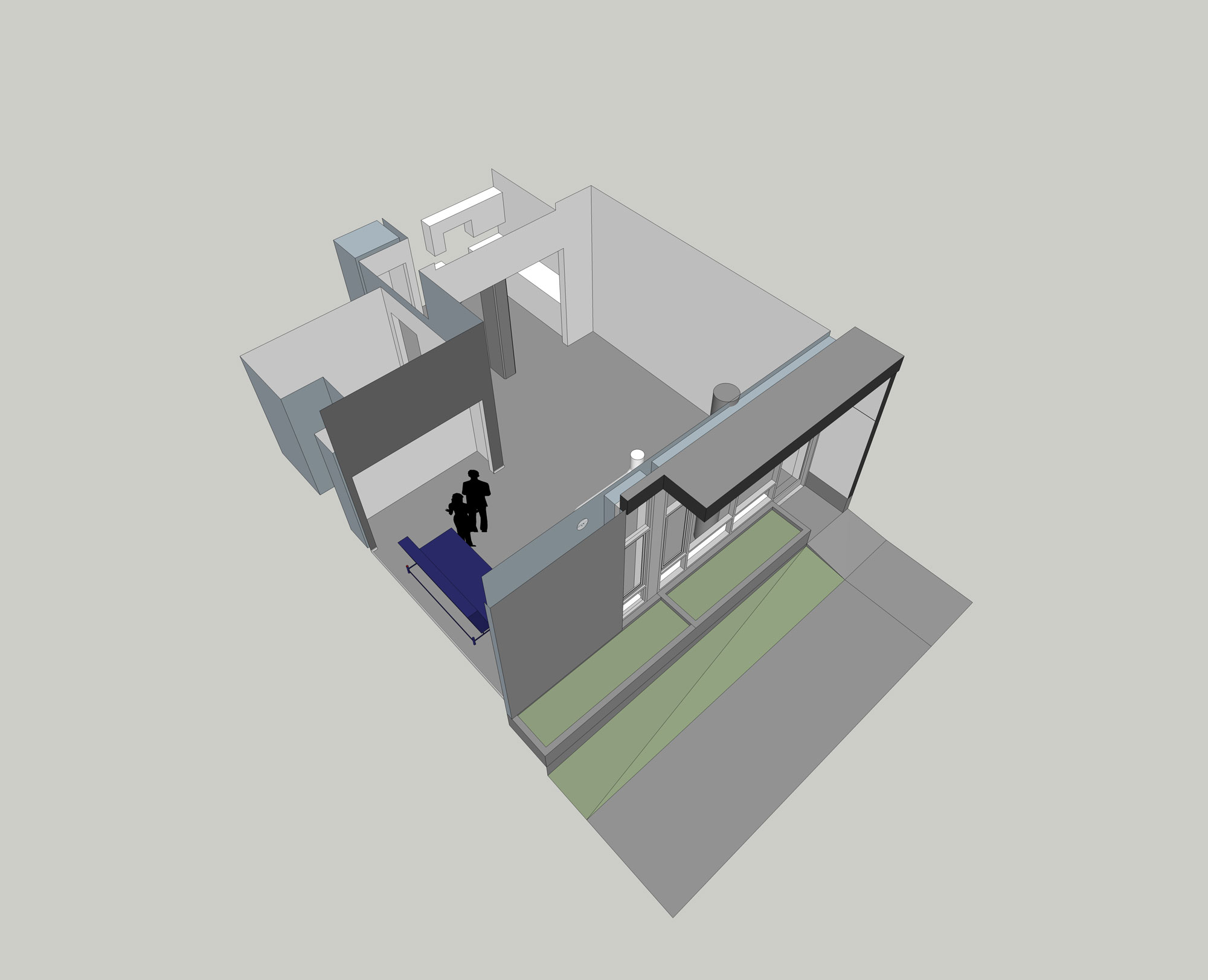
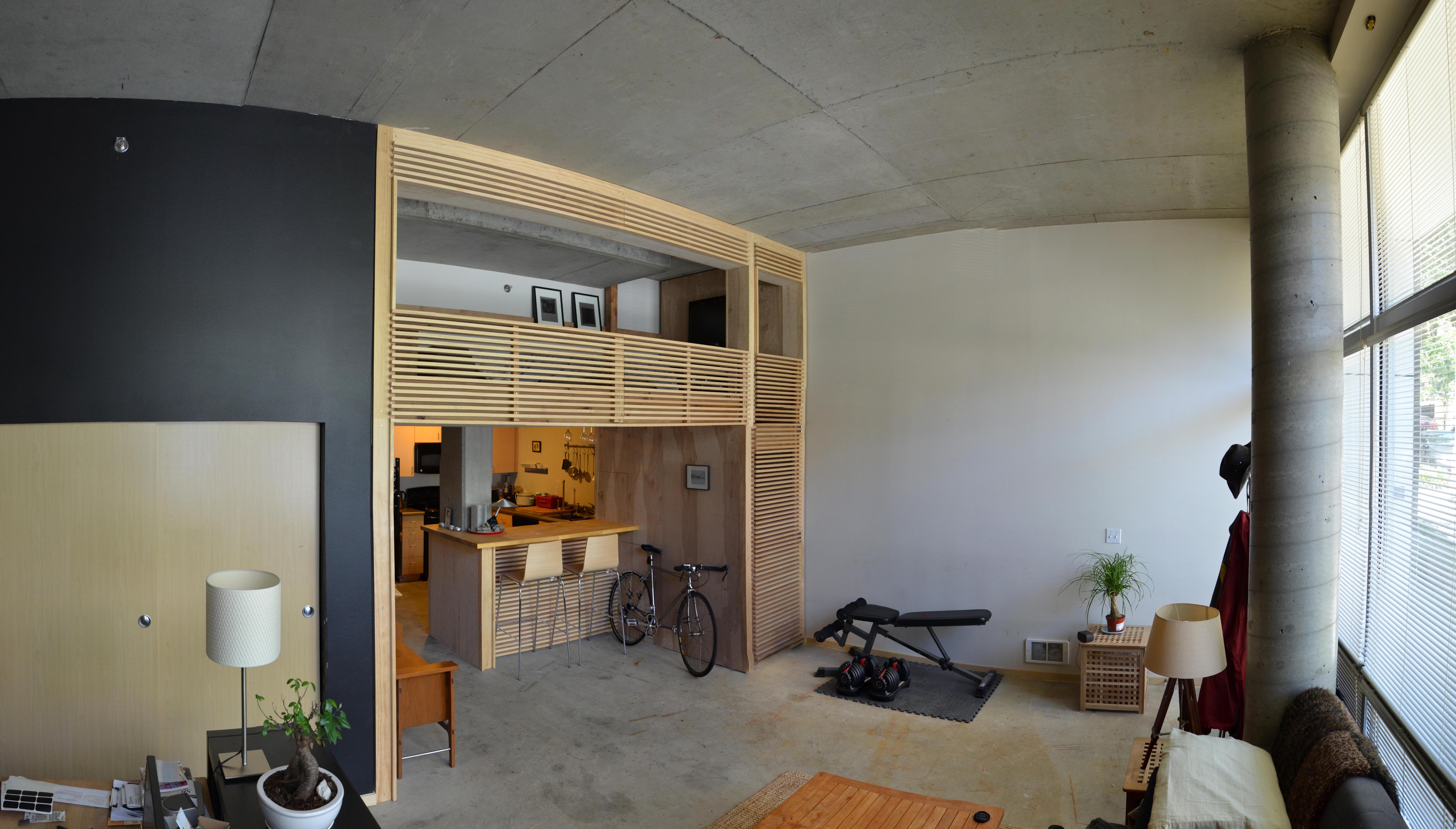
To create a more livable space in this apartment, several things would have to change. First, since the unit was a studio, there was no bedroom. Creating space for a bed, and some modicum of privacy was the first priority. Second, the kitchen space was awkwardly place in a rear corner, and lacked storage. Creating an inserted volume ended up being the right solution, placing a small bed loft (holding a queen size bed) above a kitchen bar that added a place to eat meals, socialize, and created additional storage for the kitchen. Eleven iterations of the design were considered, each one improving upon the last, and eventually served as construction documents and estimating tools for budgeting.
Construction
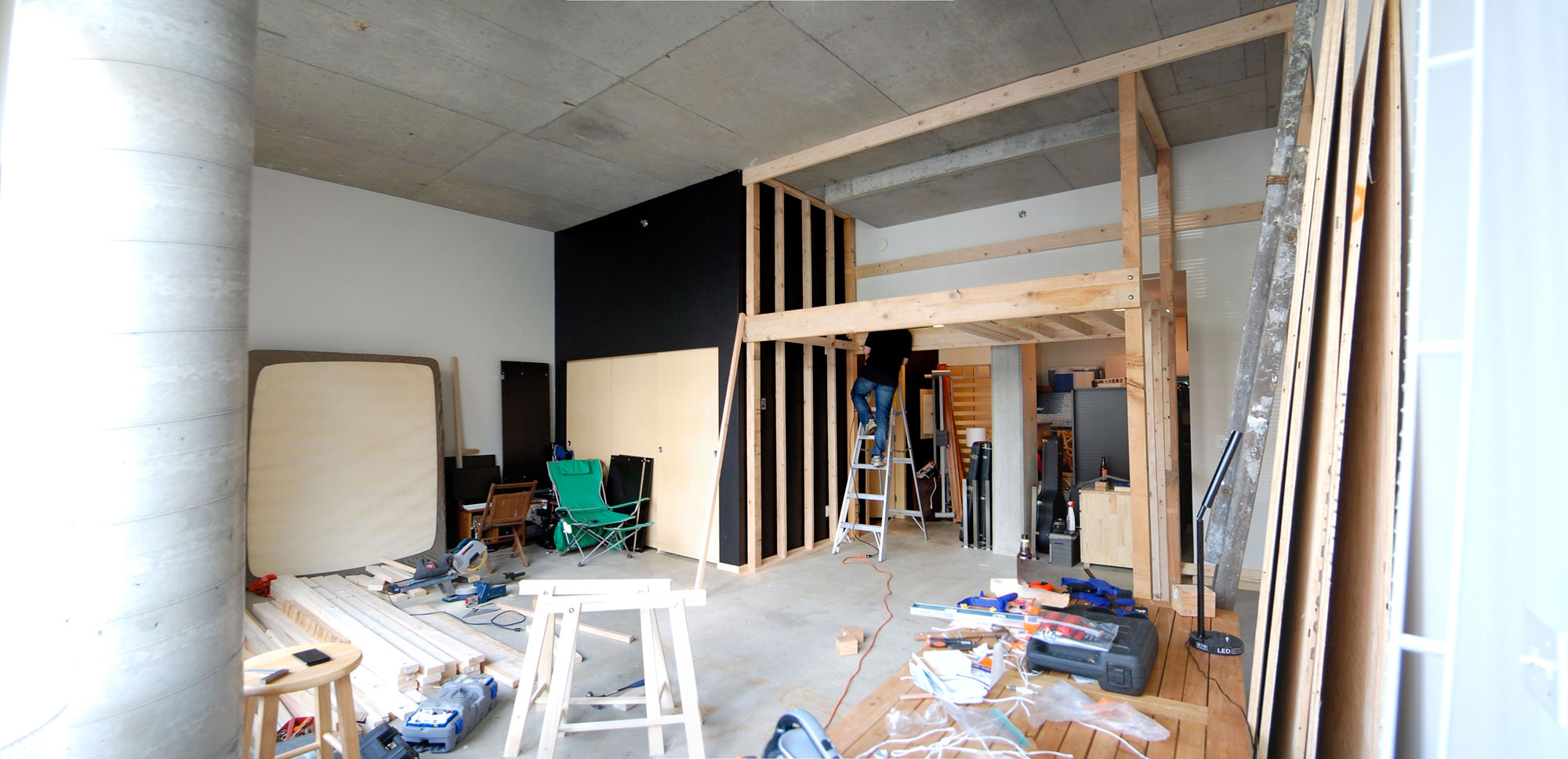
Construction took place entirely within the apartment itself, and could not penetrate any walls. Therefore, the entire loft was designed to be built with only hand tools - a router, circular saw, miter saw, jigsaw, and drill. The frame is build with standard dimensional lumber, and the plywood finish face provides shear strength. The entire structure was shimmed into place to prevent any movement, and created a very stable platform.
Finished Space
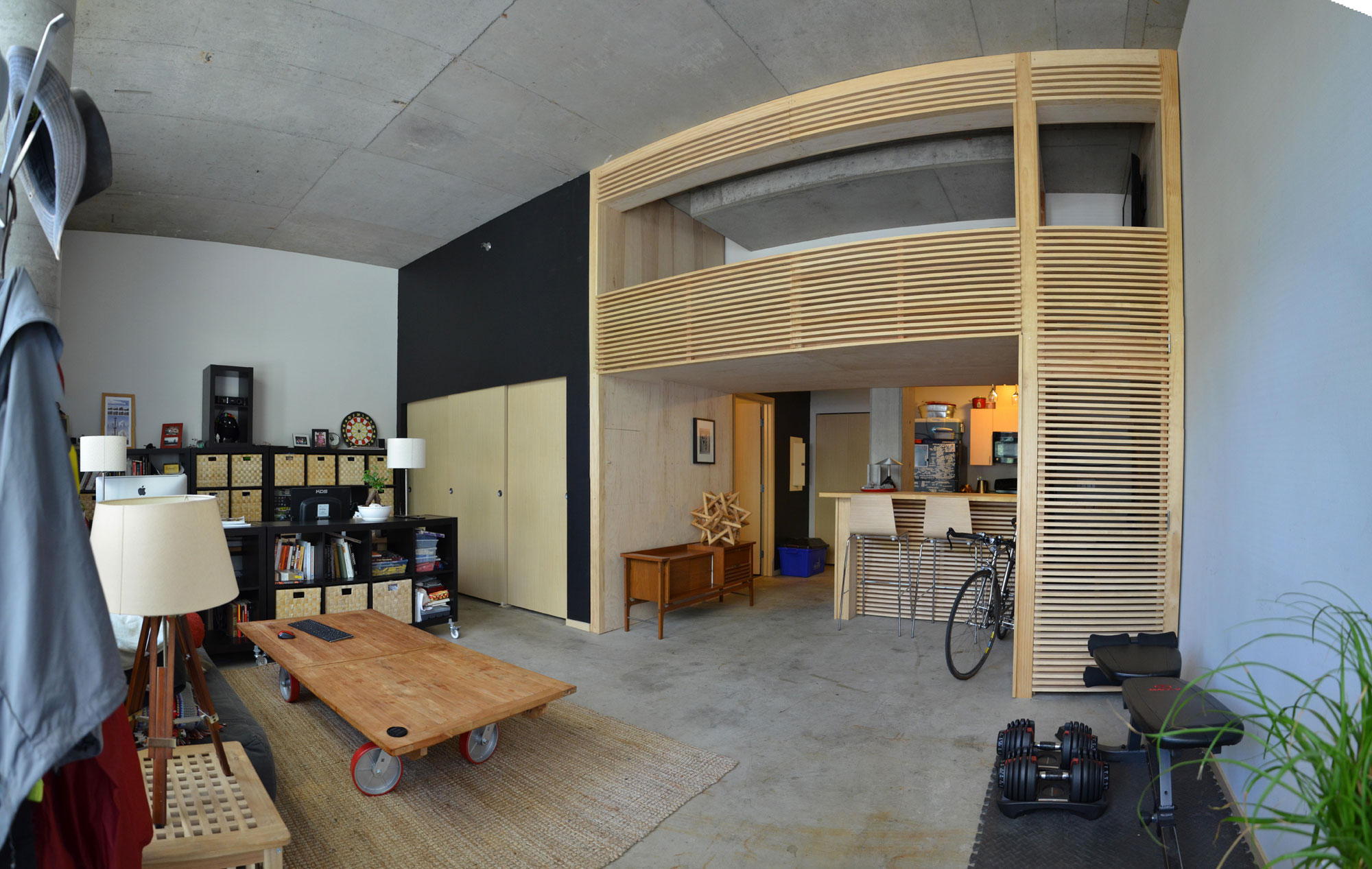
The finished loft served many functions, including sleeping, eating, entertaining, and storage. The loft nestled into otherwise unusable space, and completed the volume of the main living area, creating a much more coherent spatial experience. When I moved out, the entire loft was able to be disassembled with a wrench and a screwdriver, and the lumber recycled.